On this page
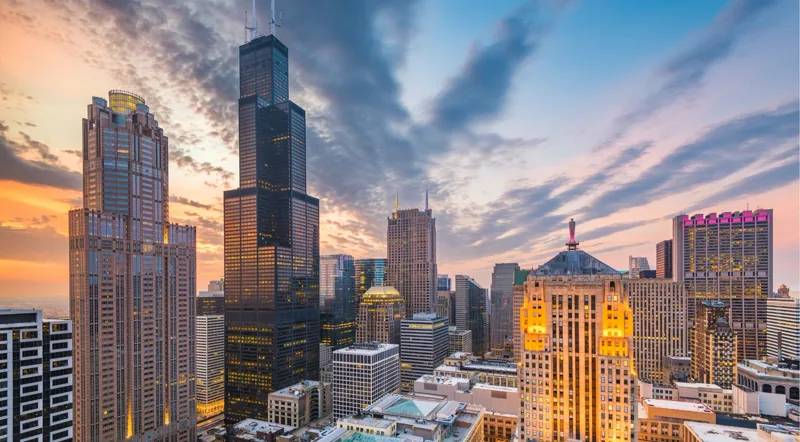
Chicago is a genuinely well-organized city to visit. The lakefront, river, Loop, and Magnificent Mile — the four corridors that hold most of the major attractions — are all within walking distance of each other, and the rest of the city is well connected by the CTA L train. Below is an honest guide to what's worth your time and how to fit it all in.
Quick answer
The essential Chicago visit covers: Millennium Park, an architecture river cruise, one observation deck, at least one world-class museum, and the lakefront. Three days is comfortable; two is fine; one day is a sprint but possible.
- Go up: Skydeck Chicago (1,353 ft, the classic) or 360 Chicago (1,000 ft, a step cheaper).
- On the river: An architecture river cruise — 75 to 90 minutes and the best architectural overview of the city.
- Free highlights: Millennium Park, Cloud Gate, the Riverwalk, the lakefront.
- Save money: Chicago CityPASS covers the decks, a river cruise, and two museums in one bundle.
Other experiences you might enjoy
The essential Chicago visit covers Skydeck Chicago at Willis Tower and 360 Chicago at 875 N. Michigan Avenue for the aerial view, a Chicago architecture river cruise for the buildings at water level, and a Chicago CityPASS for bundling everything with the top museums. Browse current availability and tours below.
When to visit Chicago
Spring (May–June) is ideal for a first visit — manageable crowds, warming temperatures, and the outdoor spaces coming back to life. The Riverwalk reopens, boat tours resume their full schedules, and hotel prices haven't hit peak-summer levels yet.
Summer (July–August) is peak season and peak Chicago. Lollapalooza, Blues Fest, Jazz Fest, and dozens of neighborhood festivals run through the season; the lakefront beaches are open; and every boat, rooftop, and outdoor venue is running at full capacity. Crowds are at their heaviest and prices at their highest — but everything is available and the city is in full swing.
Fall (September–October) is arguably the best time to visit. Crowds thin after Labor Day, the light turns golden, and the architecture looks its best in clear autumn air. Restaurant reservations get easier to land and hotel rates soften. Cruise season runs through early November.
Winter (December–March) rewards visitors who don't mind the cold. Crowds are thin at the observation decks, the city's indoor attractions — Art Institute, Field Museum, Chicago Architecture Center — are excellent without a wait, and the frozen lakefront produces some of the most dramatic city photography anywhere. Dress in true layers, not a light coat and optimism.
Top things to do in Chicago
Millennium Park and the Bean
The 24.5-acre Millennium Park is Chicago's living room, and the Cloud Gate sculpture (the Bean) is one of the most photographed objects in the world for good reason — it reflects the whole skyline in a single curved mirror. The park also houses the Crown Fountain, the Lurie Garden, and the Frank Gehry-designed Jay Pritzker Pavilion, which hosts free summer concerts under its stainless-steel bandshell. All free. Opens at 6 a.m., closes at 11 p.m.
Chicago Riverwalk
The Riverwalk runs nearly a mile along the south bank of the Chicago River through downtown, with restaurants, bars, kayak rentals, and seating right at water level beneath the bridges. It's the best place to watch boat traffic and get a sense of the city's relationship with its river. The main Riverwalk season is May through November; the boat tour docks are right here too, at the Michigan Avenue Bridge.
Architecture river cruise
The single best first activity for any Chicago visitor. In 75 to 90 minutes on the river, a guide walks you through a century and a half of architecture — Wrigley Building, Marina City, Willis Tower, Jeanne Gang's Aqua — and explains the city's role as the birthplace of the skyscraper. The Chicago Architecture Center cruise is the gold standard; the Shoreline cruise is included in CityPASS and other attraction passes. See our complete Chicago architecture tours guide for the full comparison.
Observation decks
Chicago's two observation decks — Skydeck Chicago at Willis Tower and 360 Chicago at 875 N. Michigan — offer genuinely different vantage points and experiences. See the full breakdown in the section below.
Museums
The Museum Campus on the lakefront puts three world-class museums within a five-minute walk of each other: the Field Museum (natural history, including Sue the T. rex), Shedd Aquarium (the most visited aquarium in the U.S.), and the Adler Planetarium. Farther along the lakefront, the Museum of Science and Industry occupies the only remaining building from the 1893 World's Columbian Exposition. The Art Institute of Chicago is in the Loop — one of the great art museums in North America, with a Renoir and Seurat and Nighthawks you'll recognize on sight.
Navy Pier
The 3,300-foot pier into Lake Michigan is Chicago's most visited attraction, with a Centennial Wheel (the big Ferris wheel), restaurants, live entertainment, and the Chicago Shakespeare Theater. It reads touristy because it is — but the lake views from the end of the pier, especially at sunset, are genuinely worth the walk out.
Lincoln Park
One of the country's great urban parks and home to the Lincoln Park Zoo — free admission, open daily — plus the Peggy Notebaert Nature Museum, the Conservatory, and several miles of lakefront walking paths. The Wrigleyville and Lincoln Park neighborhoods surrounding the park are among the best for a casual afternoon walk, lunch, or coffee.
The Magnificent Mile and Michigan Avenue
The 13-block stretch of North Michigan Avenue from the Chicago River to Oak Street is Chicago's main retail and hotel corridor. It's also where most of the city's high-end hotels and flagship stores are concentrated. The blocks between the river and the Millennium Park entrance are the most architecturally rich — the Wrigley Building, Tribune Tower, and 360 Chicago itself are all here.
Wrigley Field
Even if you're not a baseball fan, attending a Chicago Cubs game at Wrigley Field (built in 1914, the second-oldest MLB stadium) is worth doing for the atmosphere and the neighborhood. The Wrigleyville bars fill up three hours before game time. Tours of the stadium run year-round.
Itineraries: 1, 2 and 3 days in Chicago
1 Day in Chicago
One day is a sprint, but the core attractions cluster well enough to make it work. Focus on the area between Michigan Avenue and the lakefront.
- Morning: Architecture river cruise from the Michigan Avenue Bridge (75–90 min).
- Late morning: Walk the Riverwalk or pop into the Chicago Architecture Center at 111 E. Wacker.
- Midday: Lunch along the Riverwalk or Millennium Park.
- Afternoon: Millennium Park — Cloud Gate, Crown Fountain, Pritzker Pavilion (free).
- Late afternoon: Skydeck Chicago at Willis Tower or 360 Chicago on the Magnificent Mile (1–2 hrs).
- Evening: Dinner in River North or the West Loop.
2 Days in Chicago
Two days lets you do the highlights properly without rushing.
Day 1 — The river and the decks. Morning architecture river cruise → Riverwalk lunch → Millennium Park → afternoon at Skydeck or 360 Chicago → dinner in the West Loop or River North.
Day 2 — The lakefront and museums. Morning at the Art Institute in the Loop → lunch near Michigan Avenue → Museum Campus in the afternoon (Field Museum, Shedd, or Adler, one or two depending on pace) → evening walk along the lakefront or Navy Pier at sunset.
3 Days in Chicago
Three days is the sweet spot for a first visit — enough time to go deeper without running ragged.
Day 1 — River and architecture. Architecture river cruise → Chicago Architecture Center → Riverwalk → Millennium Park.
Day 2 — Decks and lakefront. Skydeck Chicago in the morning (less crowd wait) → Museum Campus in the afternoon → lakefront at sunset.
Day 3 — Neighborhoods and food. Logan Square or Wicker Park in the morning → Lincoln Park Zoo (free) → Art Institute in the late afternoon → Chicago pizza dinner.
If you have a CityPASS, the two days covering the paid attractions (decks, river cruise, Field Museum or Shedd) are best treated as a unit to get the most from the nine-day validity window.
Chicago's observation decks
Going up is the most natural way to end a first day — after seeing the skyline at river level, you get the same buildings from above. Chicago has two decks, genuinely different in character.
Skydeck Chicago — Willis Tower
Skydeck Chicago is on the 103rd floor of Willis Tower at 1,353 feet — the highest observation deck in the United States. The Ledge glass balconies let you step out over the edge with nothing but glass beneath your feet. On a clear day the view extends across four states. This is the quintessential Chicago experience, and the building itself is an architectural landmark: Fazlur Khan's bundled-tube structural system, invented here, is why supertall construction is possible at all.
Skydeck Chicago — 103rd floor of Willis Tower
The highest observation deck in the United States, with The Ledge glass balconies included in every ticket. 1,353 feet above the city. Clear days reach four states. Free 24-hour cancellation.
Free cancellation up to 24 hours before · Secure checkout via GetYourGuide
360 Chicago — 875 N. Michigan Avenue
360 Chicago occupies the 94th floor of 875 N. Michigan at 1,000 feet, with unobstructed floor-to-ceiling windows and the TILT experience — a platform that tilts you out at an angle over Michigan Avenue. The view north along the Magnificent Mile toward the lake is spectacular and different from what you get at Skydeck. The ticket is a step cheaper than Skydeck, and the crowds tend to be lighter. For a head-to-head comparison, see our Skydeck vs 360 Chicago breakdown.
360 Chicago — 94th floor of 875 N. Michigan
1,000 feet above the Magnificent Mile, with TILT included in standard admission. Unobstructed floor-to-ceiling windows with north, south, east, and west views. Free 24-hour cancellation.
Free cancellation up to 24 hours before · Secure checkout via GetYourGuide
Save with Chicago CityPASS
If your itinerary includes the observation decks, a river cruise, and at least one museum, a bundled pass almost always saves money over buying tickets separately.
The Chicago CityPASS ($144 adult / $114 child, valid nine consecutive days) covers five attractions: Shedd Aquarium and Skydeck Chicago with Expedited Entry are fixed inclusions, and then you choose three from a menu that includes 360 Chicago, the Shoreline architecture river cruise, the Field Museum, the Museum of Science and Industry, and the Adler Planetarium. Advertised savings of up to around 50% — the math genuinely works out if you're hitting three or more of those paid attractions.
Shorter trips or smaller budgets have options too: the Chicago C3 ($109 adult) includes three attractions, and the Go City Chicago All-Inclusive Pass bundles a wider list of attractions for a daily rate. See our complete Chicago CityPASS guide for the full comparison.
Chicago CityPASS — five top attractions in one bundle
Shedd Aquarium and Skydeck Chicago (with Expedited Entry) plus your choice of three more: 360 Chicago, Field Museum, Shoreline architecture cruise, Museum of Science and Industry, or Adler Planetarium. Valid nine consecutive days. Free 24-hour cancellation.
Free cancellation up to 24 hours before · Secure checkout via GetYourGuide
Getting around Chicago
Chicago does not require a car for a tourist visit and is actually much easier without one.
The CTA L train. Chicago's elevated and subway train network covers all major visitor areas. The key lines for sightseeing: the Red Line (runs the lakefront from Hyde Park through the Loop up to Wrigleyville), the Blue Line (O'Hare Airport to downtown in about 45 minutes), and the Brown, Orange, Pink, Purple, and Green lines that circuit the downtown Loop. An all-day L pass costs $5 and is the best value for a sightseeing day. Single rides are $2.50.
Walking. The area between Millennium Park, the Riverwalk, Navy Pier, and the Magnificent Mile is walkable in a day — it's about 1.5 miles from Millennium Park to Navy Pier. The lakefront trail extends 18 miles and is used by runners, cyclists, and walkers.
Rideshare. Lyft and Uber work reliably throughout the city and are the easiest option for Museum Campus or late-night trips. Surge pricing applies during major events.
Bikes. Divvy bike-share has stations throughout the core tourist areas; day passes run about $15. For longer distances along the lakefront, it's often faster than rideshare.
Getting from the airport. O'Hare (ORD) connects downtown via the Blue Line L in about 45 minutes for $2.50. Midway (MDW) connects via the Orange Line in about 25 minutes. Both trains run 24 hours.
Chicago Visitor FAQ
What are the best things to do in Chicago for first-time visitors?
How many days do you need in Chicago?
Should I go up Skydeck or 360 Chicago?
What is the best time of year to visit Chicago?
Is Chicago CityPASS worth it?
How do you get around Chicago?
What is there to do in Chicago for free?
Worth adding to your itinerary
If you're planning a Chicago visit, the experiences that anchor the trip are the two observation decks and the architecture river cruise. Skydeck Chicago at Willis Tower and 360 Chicago at 875 N. Michigan give you the skyline from above; the Shoreline Architecture River Cruise and Chicago Architecture Center's First Lady cruise give you the buildings at eye level. The Chicago CityPASS is the smartest way to bundle the decks with the cruise and the top museums. Browse current availability and tours below.
This page may contain affiliate links. If you book through them, we may earn a commission at no extra cost to you. That support helps us keep this guide updated.